


Getting dressed well isn't just about the suit or the shoes; it's about how every element works together. Men's dress socks are often overlooked, but they play a quiet yet crucial role in shaping a polished appearance. The right choice doesn't draw attention for the wrong reasons. Rather, it completes the look with intention.
Color, in particular, is where many get it wrong. A mismatch can disrupt an otherwise sharp outfit, while the right pairing creates a sense of balance and cohesion. Knowing how to coordinate your socks with your trousers, shoes, and overall palette is a small adjustment that makes a noticeable difference.
This guide breaks down how to choose the right color dress socks for different outfits so that you can approach every combination with clarity and confidence.
Should Your Socks Match Your Shoes or Your Pants?
As a general rule, your dress socks should match your pants, not your shoes. Matching your socks to your pants creates a clean, uninterrupted visual line from the hem of your pants down to your footwear, giving your overall look a more refined, elongated appearance.
When you match socks too closely to your dress shoes instead, the contrast between trousers and socks becomes more noticeable, breaking that visual flow. It's a small detail, but one that can subtly disrupt an otherwise well-coordinated outfit.
That said, "matching" doesn't always mean an exact color replica. You can choose socks that are a shade lighter or darker than your pants for a traditional, professional look. This maintains cohesion while allowing for a bit of depth. Patterns can also work well, provided they tie back to the outfit's tones rather than competing with them.

How to Match Socks to the Occasion
Knowing whether your socks should match your pants is one thing. However, knowing how to pick dress socks and adjust for the occasion, especially when considering formal dress codes and formal attire, is where real refinement comes in. Different settings call for different levels of formality, and your sock choice should reflect that with the same level of intention as your suit or shoes.
Formal and Business Settings
In professional environments and on formal occasions, including black-tie events and when wearing dark suits, showing restraint is important. Stick to socks that closely match your pants or fall within the same color family. For instance, wear navy socks with navy suits, black socks with black or dark suits, and consider dark grey socks for charcoal suits. This creates a seamless, uninterrupted line that supports a polished, understated look.
Avoid athletic socks and white socks on formal occasions, as these are traditionally associated with sports or casual settings and are not appropriate with dress shoes or formal attire. Patterns, if worn, should be subtle. Fine striped socks or minimal textures can add depth without drawing attention.
Business Casual and Smart Casual
With more relaxed business-casual dress codes, there's room for measured variation. While matching socks with your suit or trousers remains a reliable foundation, you can begin to introduce understated patterns or colorful socks with complementary tones. For example, navy trousers paired with burgundy or green socks add interest without disrupting the overall balance.
Social and Evening Occasions
Events such as dinners, weddings, evening gatherings, or casual events allow for more expression, but always within the boundaries of good taste. This is where patterned socks or richer color contrasts can be introduced with greater confidence.
Rather than matching exactly, you can wear dress socks that echo another element of your outfit, like a tie, pocket square, or even subtle tones in your shirt. For a festive or statement touch, consider red socks and coordinate them with accessories such as a tie or watch. The result feels intentional and not accidental.
Socks Length
Length plays a more important role than most realize. Beyond appearance, it directly affects comfort, coverage, and the consistency of your outfit throughout the day. A well-chosen length ensures your socks remain unseen when they should and present when it matters.
Mid-Calf
Mid-calf socks are the foundation of a well-dressed wardrobe. Made to rise high enough on the leg, they provide consistent coverage even when sitting or crossing your legs. This makes them the ideal choice for business settings, formal occasions, and long days on your feet.
More importantly, when made correctly, they stay in place. A secure, well-engineered cuff ensures the sock stays in place without slipping, allowing for a clean, uninterrupted line from trouser to shoe.
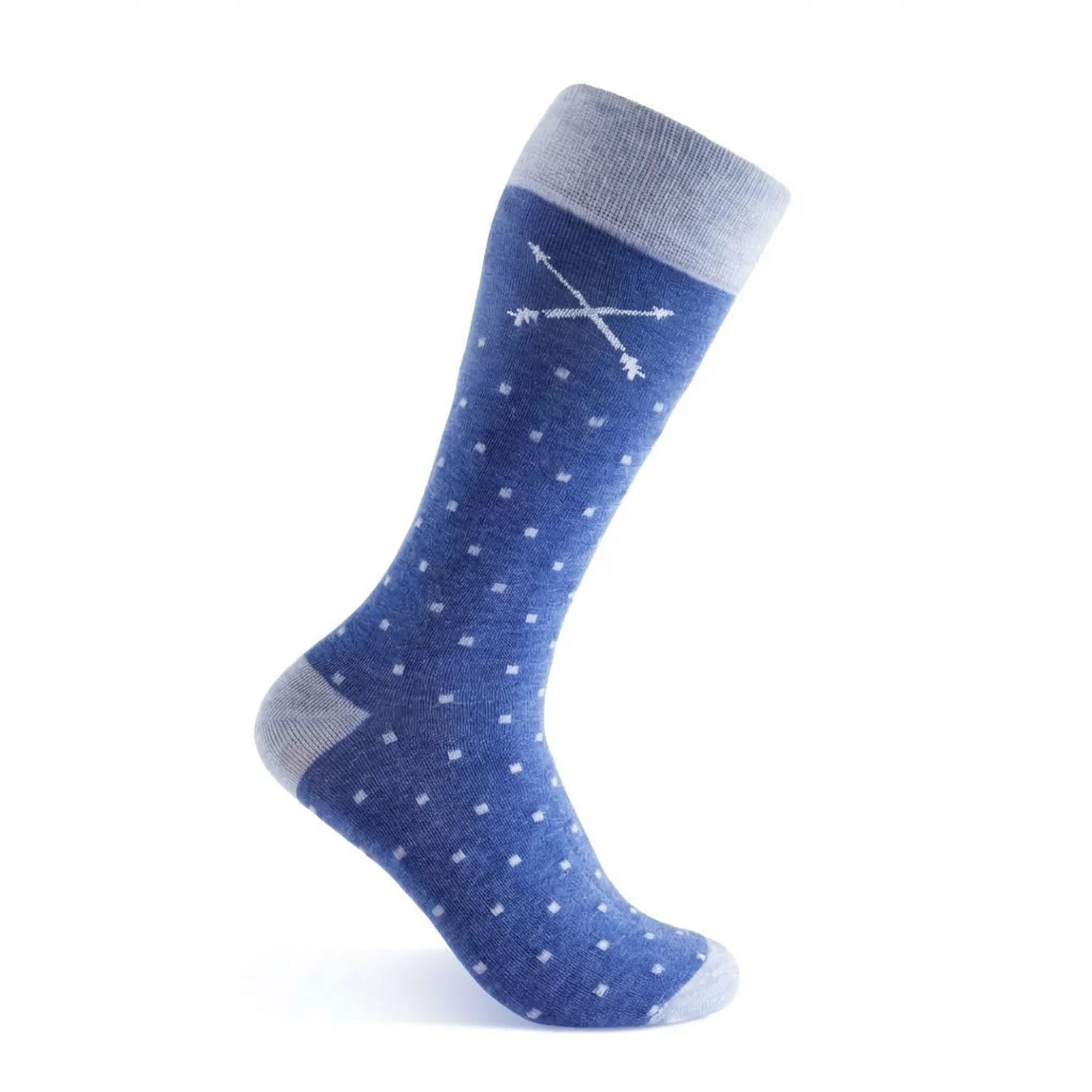
Over-the-Calf
For those who prioritize absolute consistency, over-the-calf socks offer the highest level of coverage. Extending further up the leg, they are designed to eliminate any risk of exposure, making them especially well-suited for formal wear, extended wear, and situations where presentation must remain flawless.
They also provide a more secure fit overall, reducing the need for adjustment throughout the day. For frequent travelers or professionals with long schedules, this added stability becomes a noticeable advantage.

6 Mistakes You Don't Want to Make When Matching Dress Socks
#1. Matching Your Socks to Your Shoes Instead of Your Trousers
This is one of the easiest ways to break the visual flow of an outfit. When socks match the shoes rather than the trousers, the transition from pants to socks becomes more noticeable, creating an unintended contrast.
Instead, keep your socks aligned with your trousers. It creates a longer, cleaner line and maintains a more refined appearance.
#2. Choosing Socks That Are Too Short
A dress sock should never expose skin when you sit or cross your legs. Anything shorter disrupts the formality of your outfit and draws attention for the wrong reasons.
A proper dress sock stays in place and maintains coverage throughout the day, ensuring your presentation remains consistent in every setting.
#3. Overly Bold or Distracting Patterns in Formal Settings
While patterns have their place, they should be used with restraint, especially in professional or formal environments. Loud designs or high-contrast colors can overpower an otherwise polished outfit.
If you choose to wear patterns, keep them subtle and cohesive with the rest of your look rather than making them the focal point.
#4. Ignoring Fabric and Construction
Color and pattern often get the attention, but performance is just as important. Socks that lose their shape, slide down, or feel uncomfortable can quickly become a distraction.
Well-constructed socks designed to maintain their shape and stay in place ensure that your outfit looks as good at the end of the day as it did at the start.
#5. Wearing Faded or Worn-Out Socks
Even the right color won't compensate for socks that have lost their depth or structure. Fading, thinning fabric, or stretched-out cuffs can make an otherwise sharp outfit feel neglected.
#6. Treating Socks as an Afterthought
Perhaps the most common mistake is not thinking about dress socks at all. They may be a small detail, but they play a role in how complete your outfit feels. When chosen with intention, they become a seamless extension of a well-considered look.

Matching Dress Socks to Suit Color
Navy Suits
Navy is one of the most versatile foundations in a wardrobe. The safest and most refined option is a navy sock that closely matches the suit's depth. For variation, darker tones like deep burgundy socks or forest green socks can work well, especially in subtle patterns that tie back to your overall color palette.
Charcoal and Grey Suits
With charcoal or mid-grey suits, aim for socks that stay within the same tonal range, such as mid-grey or light grey for subtle variation. Charcoal socks create a seamless look, while slightly lighter or darker greys can add depth without breaking cohesion. Purple socks also look great with these suits. Subtly patterned fabrics, such as fine stripes, can add texture while maintaining a professional appearance.
Black Suits
Black suits call for the highest level of formality, and your socks should reflect that. A true black sock is the standard here, creating a continuous line that supports a sharp, uninterrupted silhouette. Never wear white socks with dress shoes or dark suits, as this disrupts the formality and visual harmony of your outfit.
Blue Suits (Lighter Shades)
Lighter blue suits offer a bit more flexibility. Navy socks remain a reliable choice, grounding the outfit while keeping it cohesive. You can also introduce complementary tones, such as muted burgundy or subtle patterned designs, as long as they don't overpower the suit's lighter base. Experimenting with a variety of sock colors, including those in neutral tones like grey, navy, or khaki, often adds understated style and versatility to lighter blue suits.
Brown and Earth-Tone Suits
For suits in brown, tan, or other earth tones, your socks should follow suit. Brown socks, olive socks, or even deep rust tones work well here, especially when pairing socks with brown dress shoes or khaki pants. Stay within a warm, natural palette that complements the suit's richness rather than competing with it.

Frequently Asked Questions
Should Dress Socks Always Match Your Pants?
In most cases, yes. Matching your socks to your trousers creates a clean, uninterrupted line that enhances the overall look. If not an exact match, stay within the same color family or opt for a slightly darker shade. This keeps the outfit cohesive without drawing unnecessary attention.
Can You Wear Patterned Dress Socks With a Suit?
You can, if the pattern is subtle and ties back to the rest of your outfit. In more formal settings, understated designs work best. For less formal occasions, patterns can add personality.
Can You Wear the Same Dress Socks for Business and Formal Events?
Yes, provided they are refined, well-constructed, and appropriately matched to your outfit. A high-quality dress sock in classic colors like navy, charcoal, or black transitions seamlessly from office settings to formal occasions, especially when the focus remains on subtlety and consistency.
How Do You Know if Dress Socks Fit Properly?
A proper fit should feel secure without being restrictive. The sock should stay in place, maintain its shape, and sit smoothly against the leg without bunching or sagging. If it requires frequent adjustment, it's not delivering the performance expected of a well-made pair.
Conclusion
Dressing well is about getting the details right, consistently. When your socks are chosen with the same level of care as the rest of your outfit, they stop being an afterthought and become part of a complete, well-executed look. When done well, they create a clean, uninterrupted look that supports your overall outfit.
Just as importantly, they should perform as expected. A dress sock that stays in place, maintains its shape, and feels comfortable throughout the day ensures your presentation remains sharp from start to finish. In the end, it's a small detail that makes a lasting difference.

Leave a comment